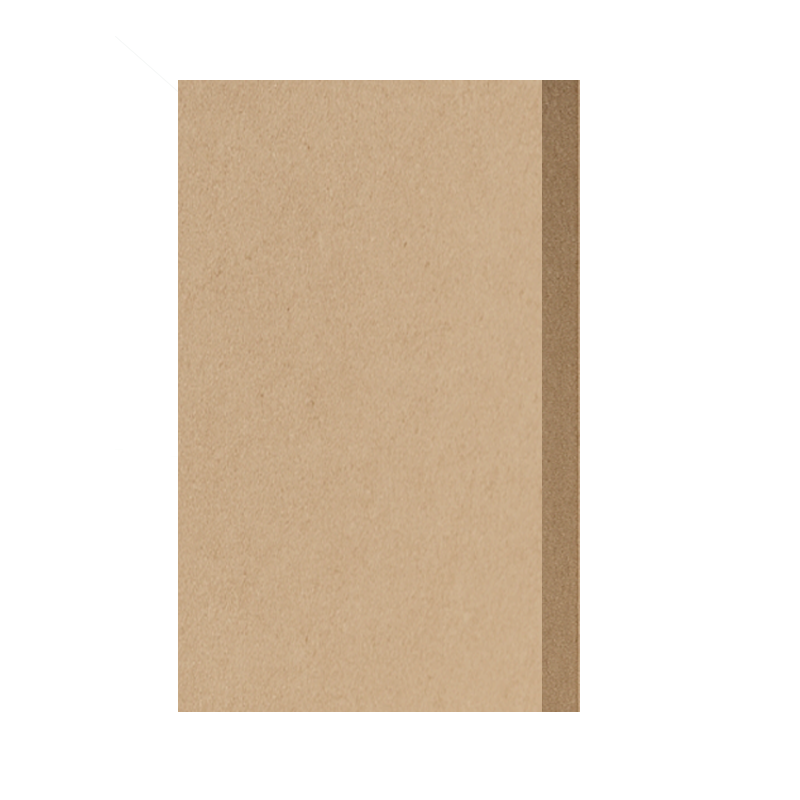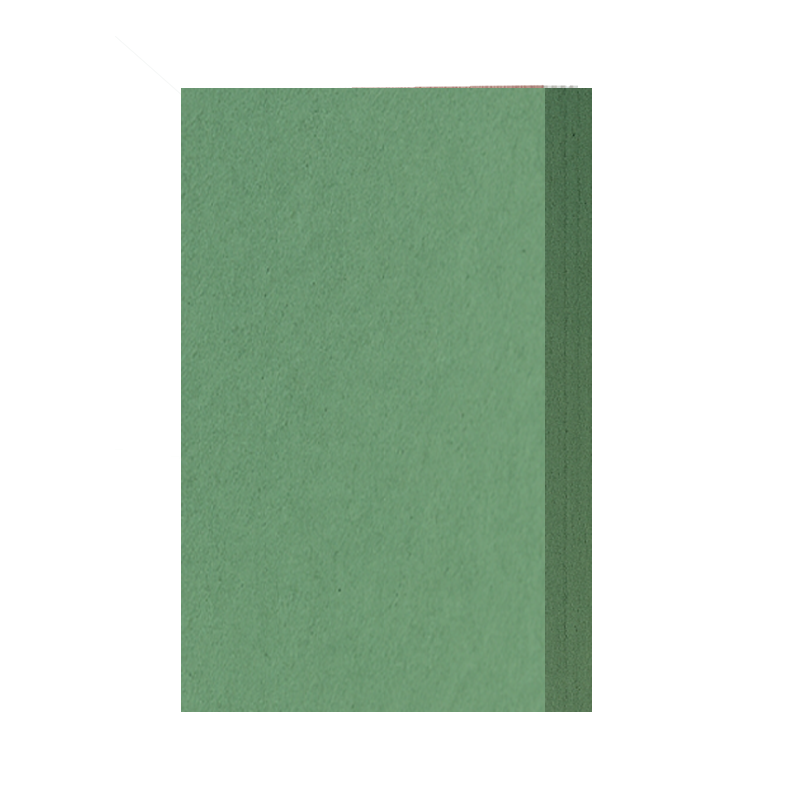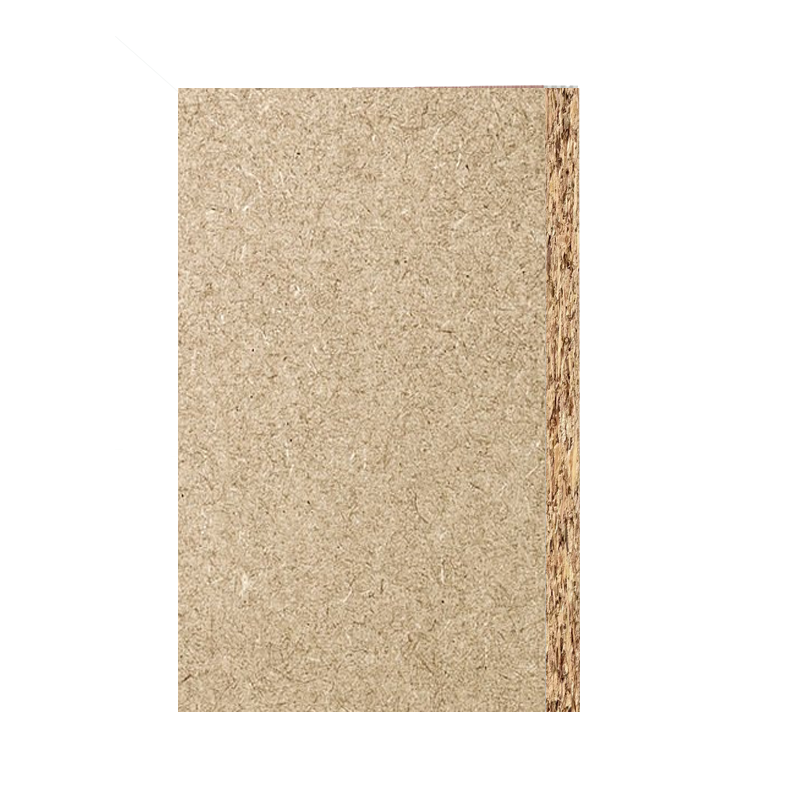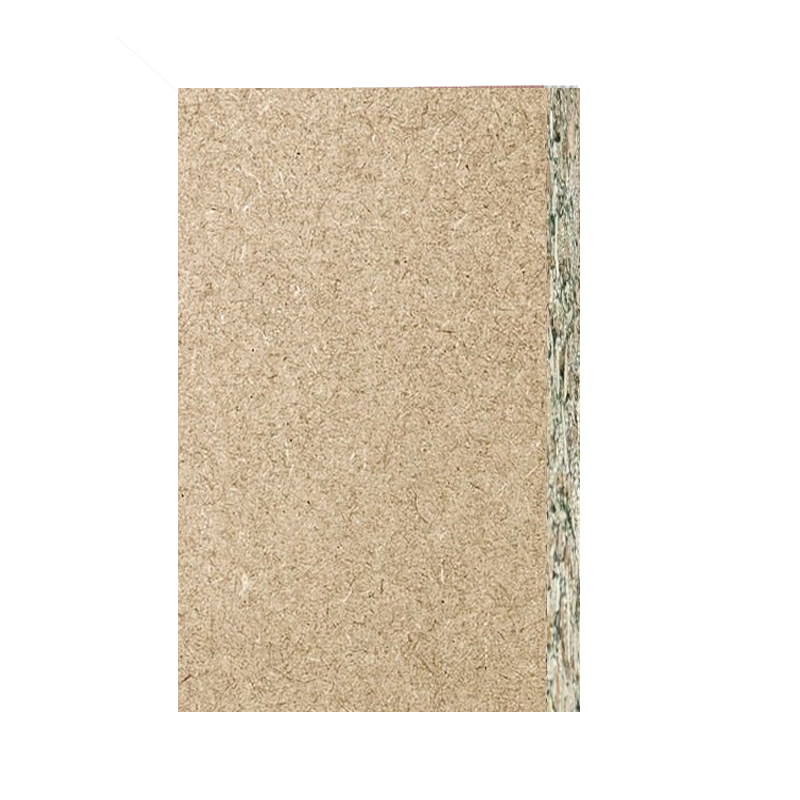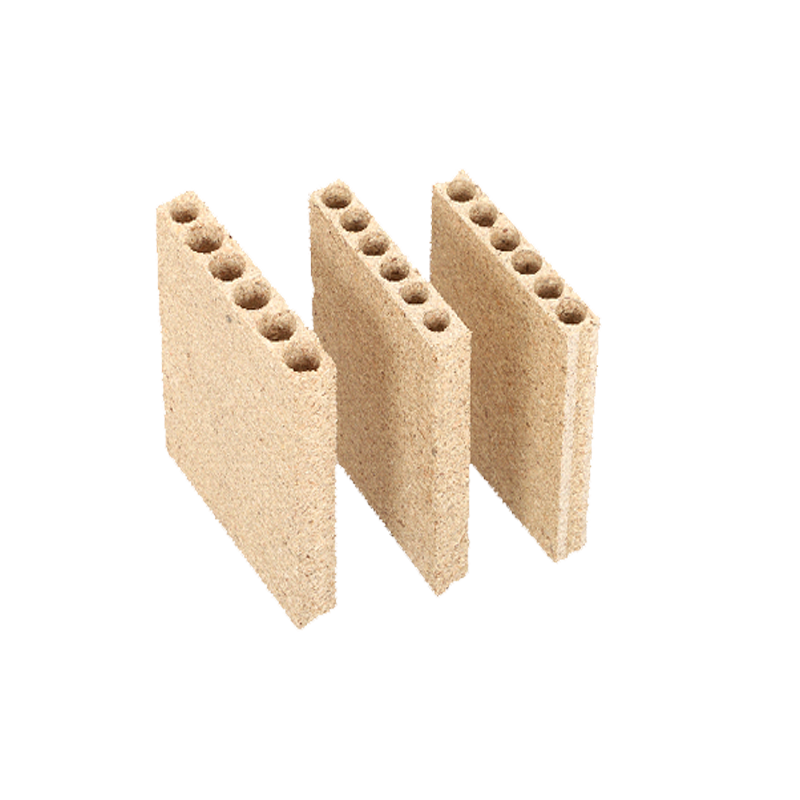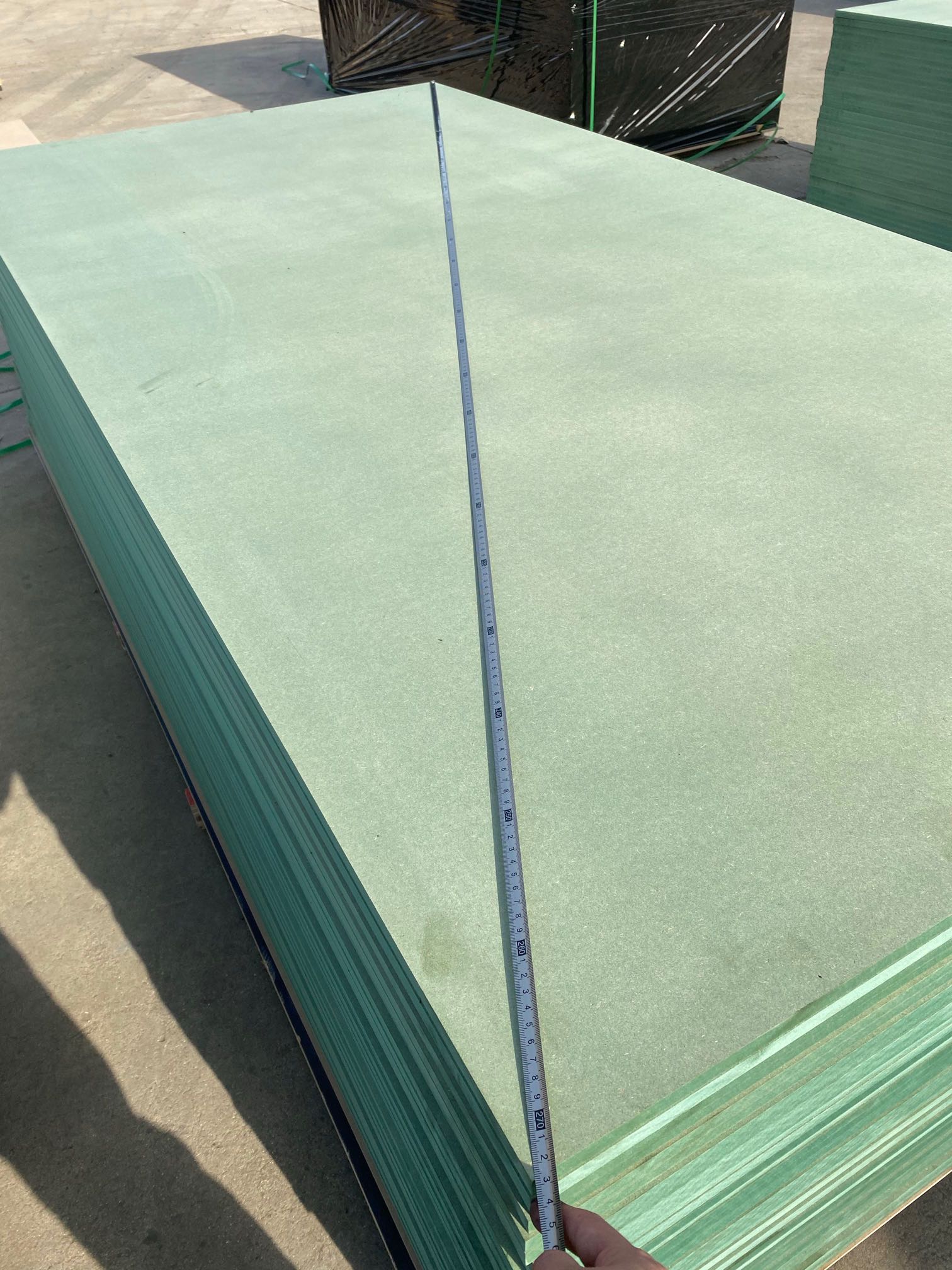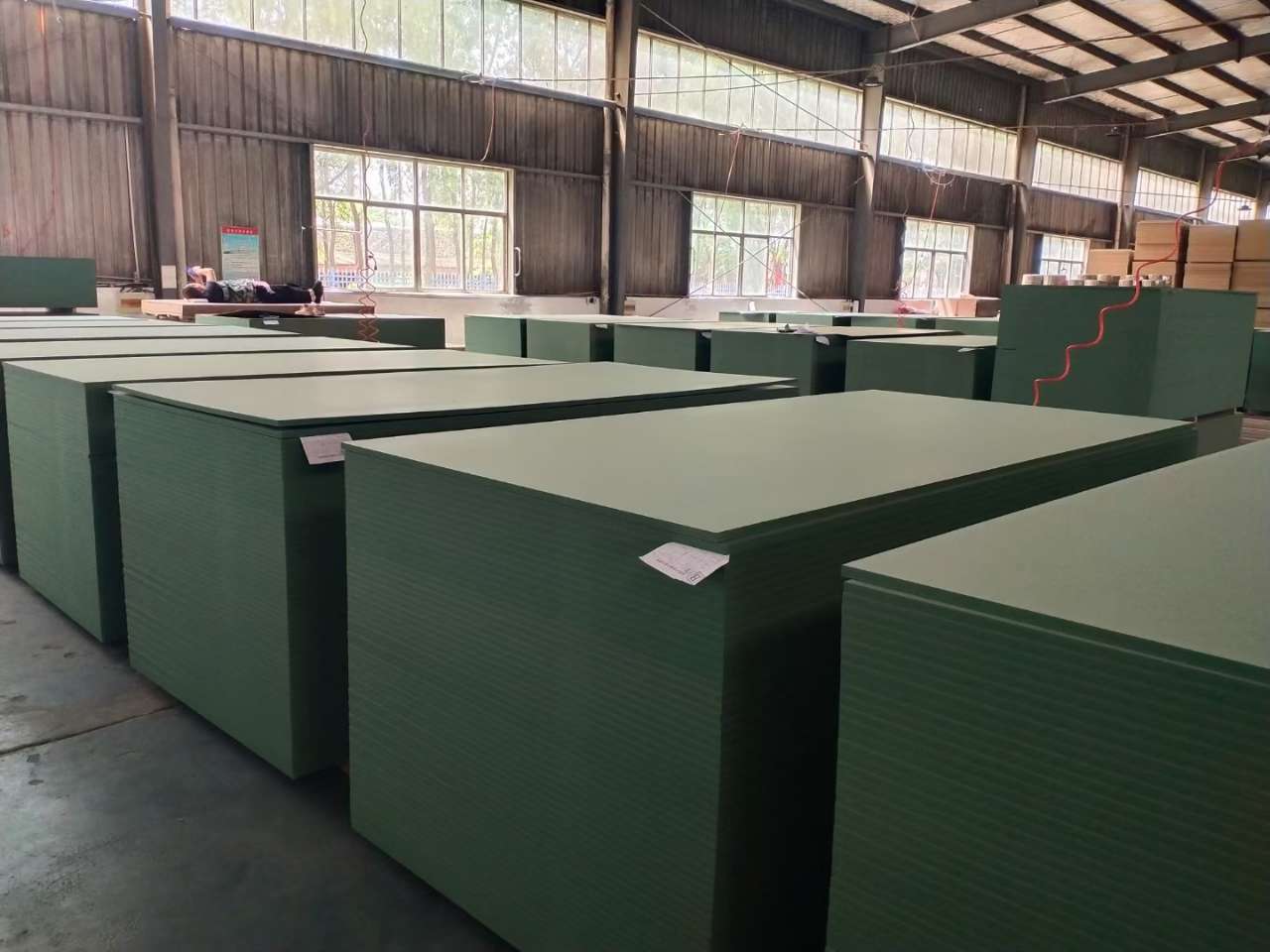
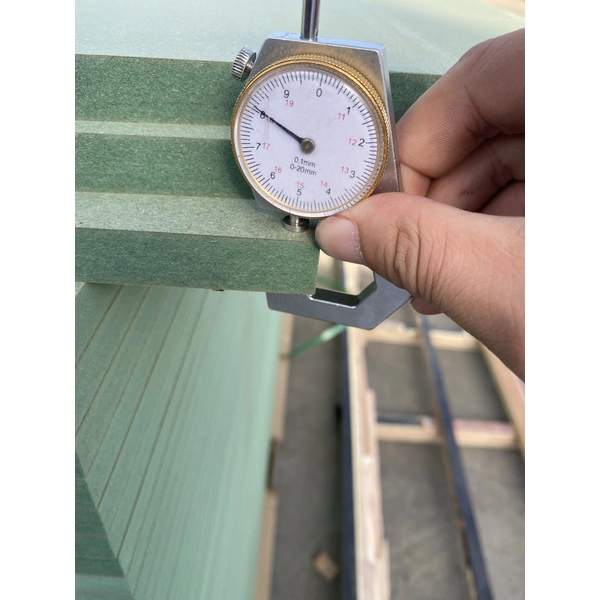


PUSEN WOOD HMR MDF BOARD

| Product Name | HMR MDF BOARD |
| Other names | Moisture Resistant/Water-Resistant/Moisture-Resistant/Moisture-Repellent/Anti-Moisture MDF Board、HMR/MR MDF、Green MDF、Black HDF、Black CDF |
| Density Class | Green MDF:710-880 kg/m³,Black HDF:880-1000 kg/m³,Black CDF:1000 kg/m³ or higher |
| Raw Material Grade | A1 grade (pure untreated wood), A2 grade (clean recycled wood), A3 grade (recycled wood without chemical preservatives) |
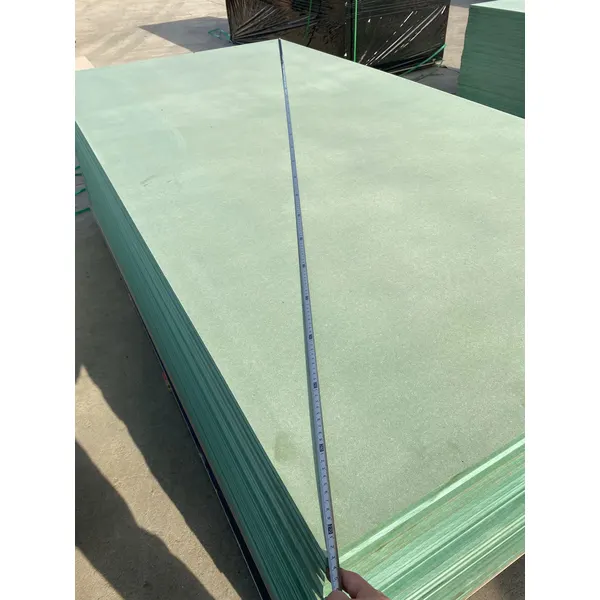
| Size | Commonly used: 1220x2440mm (4’x8′),Others: 915 mm x 1830 mm (3’x6′), 915x2135mm (3’x7′), 1200x2400mm (3.9’x7.9′), 1200 x 3600mm (3.9’x11.8′), 1220×2745 mm (4’x9′), 1220x2745mm (4’x10′), 1525 mm x 3050 mm (5’x10′), 1800 x 3600 mm (5.9’x11.8′), 1830x2440mm (6’x8′), 1830x2745mm (6’x9′), 2135x 3050mm(7’x10′),2440x3660mm(8’x10′),Upon To Request |
| Thickness | 2.5mm-30mm, regular sizes 2.5 (3/32″), 3 (1/8″), 4 (5/32″), 5 (3/16″), 6 (1/4″), 7 (9/32″), 8 (5/16″), 9 (3/8″), 10 (13/32″), 11 (7/16″), 12 (15/32″), 13 (1/2″), 14 (9/16″), 15 (19/32″), 16 (5/8″), 18 (11/16″), 19 (3/4″), 20 (25/32″), 21 (13/16″), 22 (7/8″), 24 (15/16″), 25 (1″) mm/inch, customizable upon request |
| Core | Poplar, Combi, Pine, Eucalyptus/Hardwood Wood fiber |
| Production Line Type | Multi-Opening Press Line(multi-layer line)/Continuous Flat Press Line(Siempelkamp) |
| Glue | E0 Glue,E1 Glue,E2 Glue,CARB P2 Glue,MDI(Methylene Diphenyl Diisocyanate) Glue |
| Moisture Content | 5% – 11% |
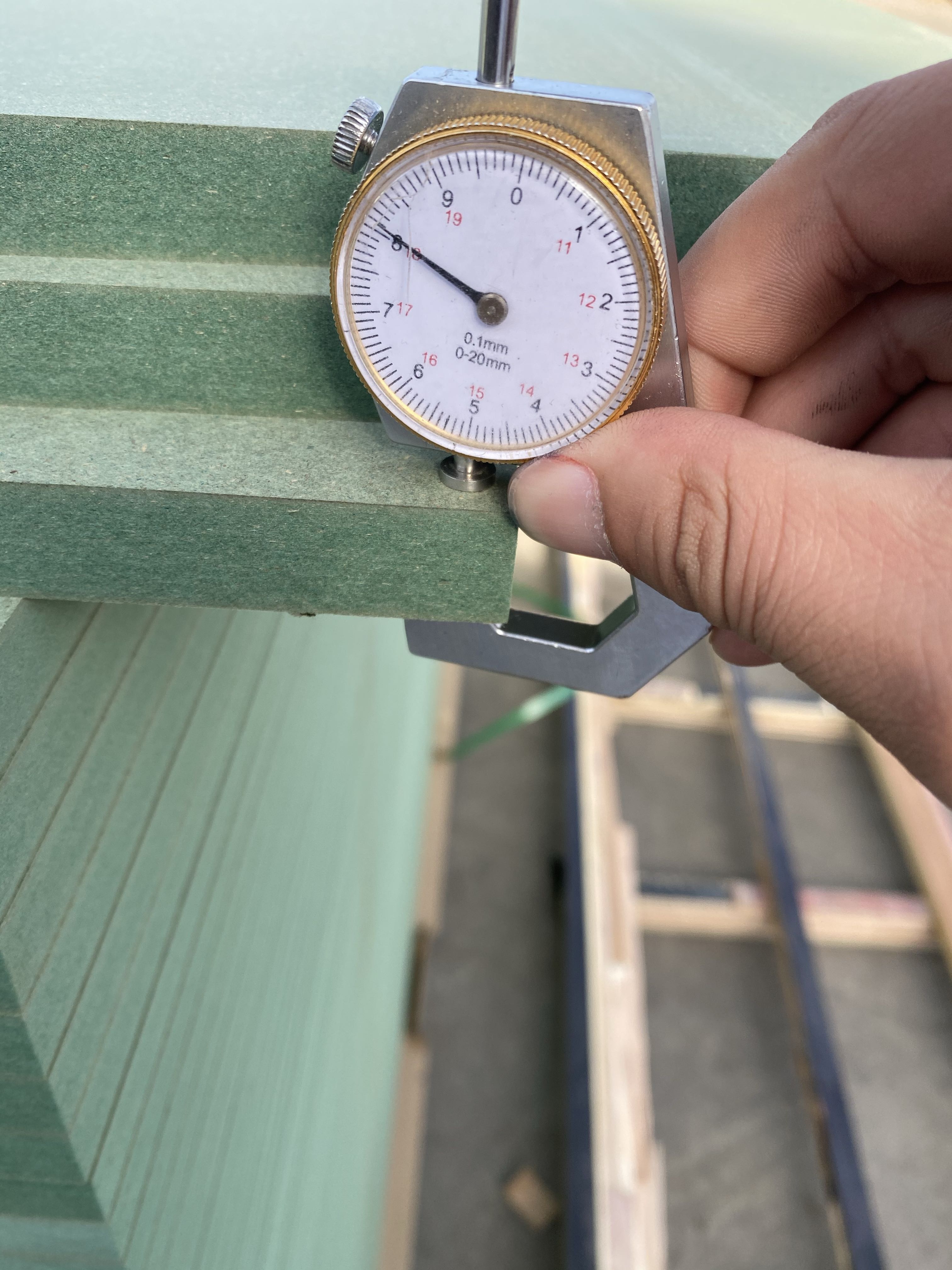
| Dimensional Tolerance | Thickness: ±0.2mm or stricter, Length & Width: ±2mm/m, Diagonal Difference: ≤2mm/m |
| Water absorption expansion rate after 24h | Water absorption rate is about 11%, thickness expansion rate is 5-9% |
| Internal Bond Strength – IB | 0.5 – 1.2 N/mm² or higher |
| Modulus of Rupture – MOR | 18 – 40 MPa or higher |
| Modulus of Elasticity – MOE | 2000 – 3500 MPa or higher |
| Thickness Swelling after 24h | Standard Board ≤ 15%, Moisture Resistant Board (MRMDF) ≤ 10% |
| Screw Holding Strength – Face and Edge | Face Screw Holding > 1200 N Edge Screw Holding > 1000 N |
| Surface Bonding Strength | 1.0 – 1.5 N/mm² or higher |
| MOQ | 42CBM/40’GP.50CBM/40’HQ |
| Packing | Inner Packing:0.2mm Thickness Plastic Bag,Outer Packing:Pallet With Carton And Strapped With Steel Tape |
| Delivery | Within 20 days After Confirm The Order |
| DaysPayment | TT,L/C,DP,MONEYGRAM,WESTERN UNION,PAYPAL |
| Usage | Kitchen cabinets, bathroom cabinets, laundry and utility room furniture; washroom partitions, display cabinets, wall panels for restaurants, retail shops, gyms, spas and medical facilities. |
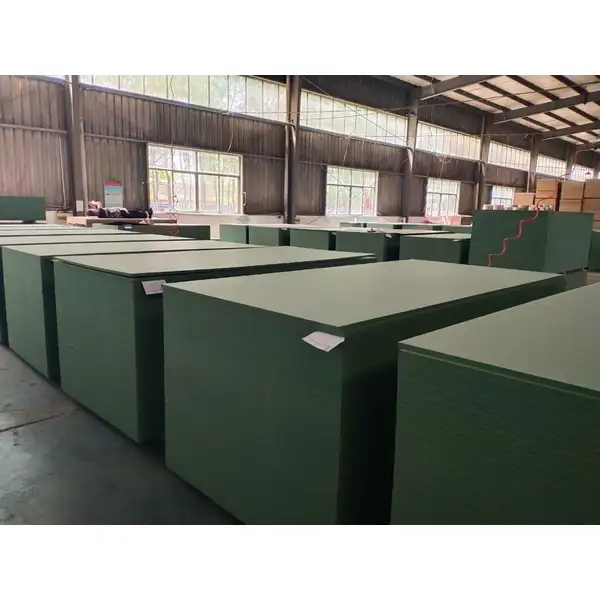
| Capacity | 10000CBM PER MONTH |
| Standard Compliance & Certifications | EN317,EN 335, EN 622-5, ANSI A208.2, JIS A 5905, ASTM E1333, ISO 9001, ISO 14001, FSC, PEFC, CARB, CE Mark, BIS etc. |
HMR MDF (High Moisture Resistant Medium Density Fiberboard) – Detailed Guide
1. What is HMR MDF?
HMR MDF (High Moisture Resistant Medium Density Fiberboard) is an upgraded type of engineered wood board developed from standard MDF. It is designed to perform better in humid and semi-moist environments.
It is manufactured using specially modified resins and moisture-resistant additives that reduce water absorption and swelling, making the board more stable in conditions with higher humidity.
However, it is important to understand that HMR MDF is moisture resistant, not waterproof. It cannot withstand long-term water exposure or soaking.
2. Manufacturing Process of HMR MDF
The production process of HMR MDF is similar to standard MDF, but with improved materials and stricter control.
1. Raw Material Selection
High-quality hardwood or softwood fibers
Removal of impurities such as bark, sand, and dust
Controlled fiber size for uniform structure
2. Moisture-Resistant Resin Application
Use of modified urea-formaldehyde resin or improved adhesive systems
Addition of wax or moisture-repellent agents
Enhances resistance to humidity and water absorption
3. Fiber Drying and Blending
Precise moisture content control
Even resin distribution across fibers
4. Hot Pressing Process
High temperature and pressure forming
Ensures uniform density and strong internal bonding
Resin curing improves structural stability
5. Cooling and Sanding
Boards are cooled and stabilized
Surface sanding creates a smooth finish suitable for finishing work
3. Key Features of HMR MDF
Improved Moisture Resistance
HMR MDF performs better than standard MDF in humid environments and resists swelling and deformation caused by moisture.
Uniform Internal Structure
The board has consistent density with no voids or weak spots.
Smooth Surface
The surface is flat and fine, suitable for painting, laminating, and veneering.
Excellent Workability
It can be easily cut, drilled, CNC-machined, and shaped without splintering.
Color Identification
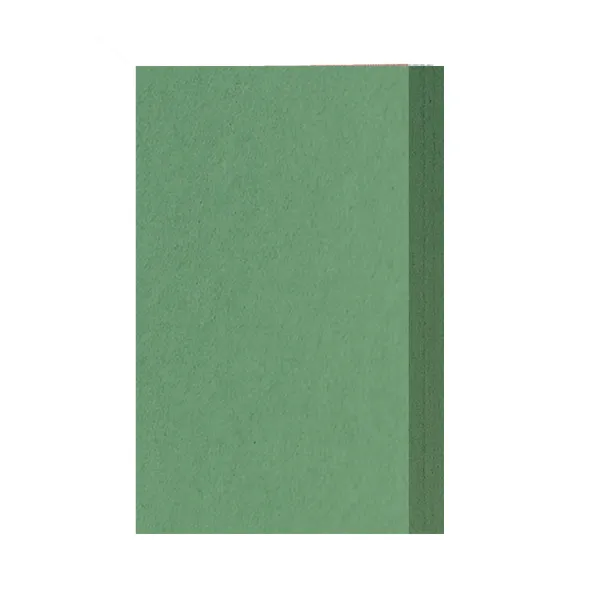
Some manufacturers dye HMR MDF green or light green to distinguish it from standard MDF.
4. HMR MDF vs Standard MDF
| Feature | Standard MDF | HMR MDF |
|---|---|---|
| Moisture Resistance | Low | Higher |
| Swelling Rate | Higher | Lower |
| Suitable Environment | Dry indoor areas | Humid indoor areas |
| Cost | Lower | Slightly higher |
| Adhesive Type | Standard resin | Moisture-resistant resin |
| Color | Brown | Often green-tinted |
5. Applications of HMR MDF
Kitchen Furniture
Kitchen cabinets
Cabinet doors
Storage units
HMR MDF is widely used in kitchens due to higher humidity levels.
Bathroom Furniture (Non-direct water contact areas)
Bathroom cabinets
Mirror cabinets
Storage units
Note: It should not be used in direct water contact areas.
Wardrobes and Custom Furniture
Bedroom wardrobes
Bookshelves
Storage furniture
Suitable for humid climates.
Commercial and Interior Applications
Display cabinets
Retail shelving
Interior partitions
Office Furniture
Office desks
Filing cabinets
Meeting tables
6. Advantages of HMR MDF
Better moisture resistance than standard MDF
Smooth and stable surface
Excellent machining and shaping performance
Cost-effective compared to solid wood and plywood
Suitable for mass furniture production
7. Limitations of HMR MDF
Despite improvements, it still has limitations:
Not Waterproof
Prolonged exposure to water can cause:
Swelling
Edge damage
Structural weakening
Moderate Strength
Not suitable for heavy structural or outdoor applications.
Resin Content
Some products may contain formaldehyde, so environmental grade selection is important.
8. Environmental Grades
HMR MDF is commonly produced under international standards:
E2 (low grade, mostly phased out)
E1 (standard export grade)
E0 (low emission grade)
CARB P2 (high standard for US market)
Higher environmental grades usually mean higher cost.
9. How to Identify High-Quality HMR MDF
When selecting HMR MDF, consider:
Surface Quality
Smooth and even surface
No rough edges or fiber lifting
Smell
Low or no strong chemical odor
Density
Heavy and consistent board structure
Cutting Performance
Clean edges without crumbling
Moisture Resistance Test
Low swelling after exposure to humidity
10. Storage and Handling Guidelines
Store in a dry and ventilated environment
Keep boards off the ground
Avoid direct rain exposure
Maintain stable indoor humidity
Seal edges for better moisture protection
11. Conclusion
HMR MDF is an improved version of standard MDF designed for better performance in humid environments. Through modified resins and enhanced production techniques, it offers improved moisture resistance while maintaining excellent workability and cost efficiency.
It is widely used in kitchen and bathroom furniture, wardrobes, and interior decoration, especially in regions with high humidity.
Although it is not waterproof or suitable for outdoor use, HMR MDF remains one of the most practical and cost-effective materials for modern interior applications.
How Pusen Wood Controls HMR MDF Board Quality
At Pusen Wood, the quality of HMR MDF (High Moisture Resistant MDF) is controlled through a strict, full-process quality management system covering raw materials, production, testing, and final inspection. The goal is to ensure every board has stable performance, strong moisture resistance, and consistent quality for global customers.
1. Strict Raw Material Selection
Quality control starts from the very beginning.
Pusen Wood carefully selects raw materials to ensure board stability:
High-quality hardwood and softwood fibers
Clean and impurity-free wood material (no sand, bark, or metal)
Consistent fiber length and density
Controlled moisture content before processing
Only qualified raw materials are allowed into production to ensure stable board structure.
2. Advanced Moisture-Resistant Resin System
To produce HMR MDF, Pusen Wood uses upgraded adhesive technology:
Moisture-resistant modified resin (improved urea-formaldehyde system)
Wax additives to reduce water absorption
Strict resin mixing ratio control
This ensures:
Lower swelling rate in humid environments
Strong internal bonding strength
Long-term dimensional stability
3. Precise Fiber Processing Control
Fiber quality directly affects board performance.
Pusen Wood controls:
Fiber refining consistency
Particle size uniformity
Even resin distribution during blending
Stable fiber moisture level before hot pressing
Uniform fiber structure helps avoid weak points inside the board.
4. Strict Hot Pressing Process Control
Hot pressing is one of the most critical stages.
Pusen Wood strictly monitors:
Pressing temperature stability
Pressure uniformity across the board
Pressing time accuracy
Resin curing conditions
This ensures:
Even density distribution
Strong internal bonding
No delamination or soft core issues
5. Density and Thickness Control
Each board is tested for structural consistency:
Edge-to-center density balance
Vertical density profile control
Thickness measurement at multiple points
Strict tolerance control ensures:
Flat boards
Accurate dimensions
Easy installation in furniture production
6. Surface Sanding and Quality Inspection
After pressing, boards undergo finishing inspection:
Smooth sanding for uniform surface quality
No scratches, press marks, or rough areas
Clean and consistent surface ready for lamination or painting
Surface quality is critical for furniture and interior applications.
7. Moisture Resistance and Performance Testing
Pusen Wood conducts laboratory and factory testing, including:
Water absorption rate testing
Thickness swelling rate test
Internal bonding strength test
Bending strength test
Screw holding strength test
Only boards that meet HMR performance standards are approved for shipment.
8. Formaldehyde Emission Control
Environmental safety is strictly controlled:
E1, E0, and CARB P2 standard options available
Low-emission resin selection
Controlled hot pressing to reduce free formaldehyde
Regular laboratory testing for compliance
This ensures safe use in indoor furniture applications.
9. Final Inspection Before Shipment
Before delivery, each batch undergoes final QC:
Visual inspection for cracks, edge damage, and defects
Thickness and size verification
Random sampling tests
Flatness and density checks
Defective boards are removed before packaging.
10. Professional Packaging and Storage Control
To maintain quality during transport:
Waterproof protective packaging
Strong stacking support to avoid bending
Moisture-proof storage environment
Proper labeling for traceability
This ensures boards arrive in perfect condition.
Conclusion
Pusen Wood controls HMR MDF quality through a complete system:
Raw material selection → resin control → fiber processing → hot pressing → density control → surface finishing → laboratory testing → final inspection
This strict quality control system ensures that every HMR MDF board has:
Stable moisture resistance
Strong structural performance
Smooth surface quality
Reliable consistency for furniture manufacturing