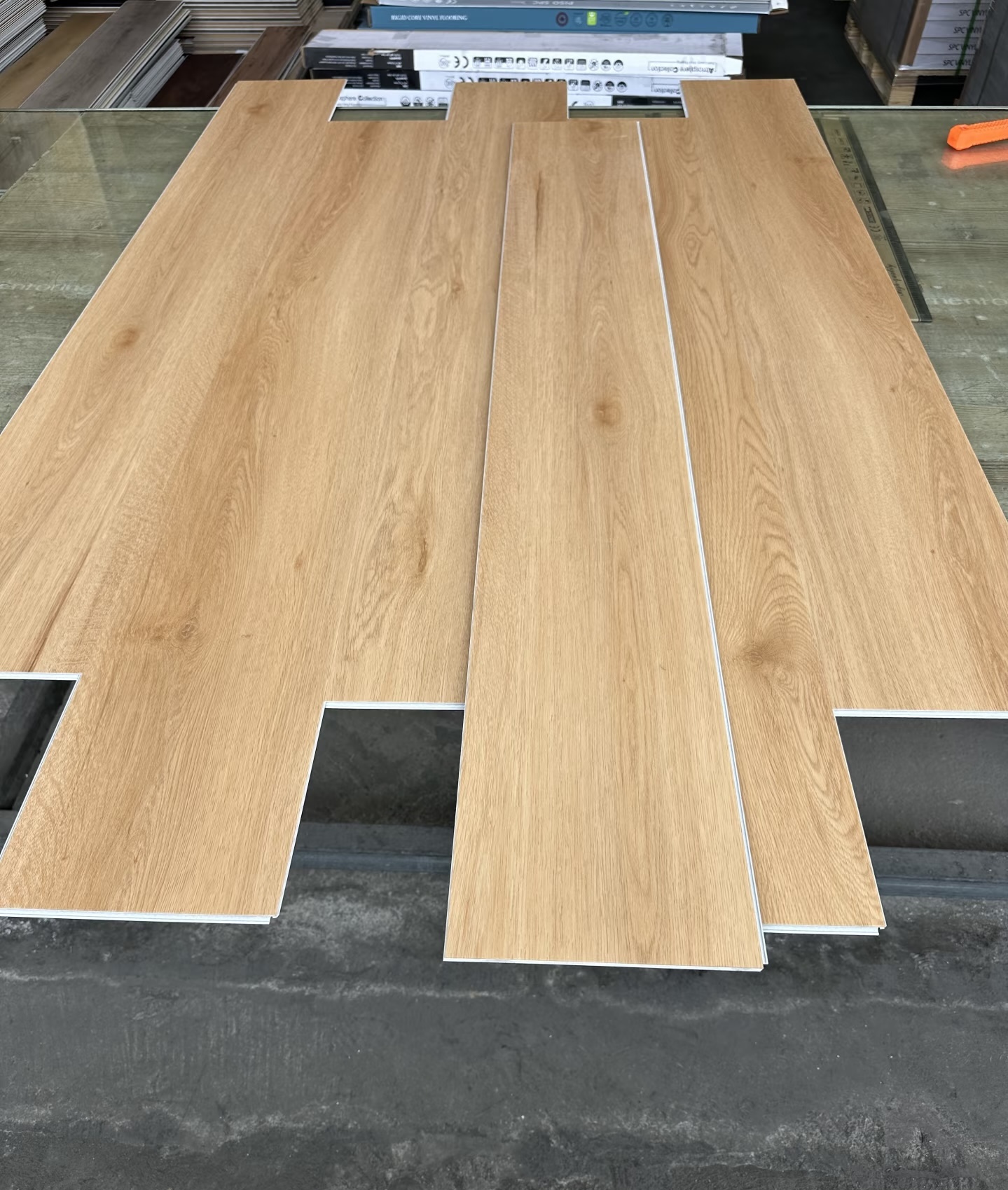
PUSEN DECOR SPC FLOOR


SPC flooring, short for Stone Plastic Composite flooring, is a modern and innovative type of rigid core vinyl flooring that has gained significant popularity in recent years. Known for its durability, water resistance, and environmental friendliness, SPC flooring is widely used in both residential and commercial spaces as an alternative to traditional materials such as hardwood, laminate, and ceramic tiles. The following is a comprehensive and detailed introduction to SPC flooring, covering its composition, structure, advantages, applications, installation, maintenance, and market trends.

Definition and Material Composition
SPC flooring is a type of rigid vinyl flooring made primarily from a combination of natural limestone powder (calcium carbonate), polyvinyl chloride (PVC), and stabilizers. These materials are mixed and processed under high temperatures to form a dense and core layer.
Compared to traditional vinyl flooring, SPC contains a higher proportion of stone content, which gives it enhanced rigidity, dimensional stability, and resistance to expansion and contraction. Additionally, high-quality SPC flooring is typically free from harmful substances such as formaldehyde, making it an environmentally friendly option.
Structure of SPC Flooring
SPC flooring is composed of multiple layers, each serving a specific function:
UV Coating Layer
This is the topmost layer that provides protection against stains, scratches, and UV radiation. It also makes cleaning easier and extends the floor’s lifespan.Wear Layer
A transparent and highly durable layer that resists abrasion, impacts, and daily wear and tear, making it suitable for high-traffic areas.Decorative Layer
This layer features high-resolution printed designs that mimic natural materials such as wood, stone, or ceramic, offering aesthetic versatility.SPC Core Layer
The core is the main structural component, made from a rigid stone-plastic composite. It provides strength, stability, and excellent resistance to moisture.Underlayment (Optional)
Often made of IXPE or EVA foam, this bottom layer enhances sound insulation, comfort underfoot, and moisture resistance.

Key Advantages of SPC Flooring
Excellent Water Resistance
SPC flooring is 100% waterproof, making it ideal for moisture-prone areas such as kitchens, bathrooms, and basements.High Dimensional Stability
Due to its rigid core, SPC flooring is less susceptible to expansion and contraction caused by temperature fluctuations.Eco-Friendly and Safe
Most SPC products are manufactured without harmful chemicals, making them safe for indoor environments like homes, schools, and healthcare facilities.Durability and Wear Resistance
Its strong wear layer allows it to withstand heavy foot traffic, making it suitable for both residential and commercial use.Easy Installation
SPC flooring typically features a click-lock system, allowing for quick and glue-free installation. It can often be installed over existing subfloors.Slip Resistance
The surface texture is designed to provide better traction, reducing the risk of slipping even when wet.Comfort and Noise Reduction
Compared to hard surfaces like tile, SPC flooring offers a more comfortable feel underfoot and helps reduce noise.

Applications of SPC Flooring
SPC flooring is highly versatile and can be used in a wide range of settings:
Residential Spaces
Suitable for living rooms, bedrooms, kitchens, and even bathrooms due to its waterproof nature.Commercial Environments
Commonly used in offices, retail stores, restaurants, and hotels where durability and aesthetics are important.Public Facilities
Ideal for schools, hospitals, libraries, and exhibition halls due to its safety and low maintenance requirements.Industrial or Specialized Areas
In certain environments requiring moisture resistance and durability, SPC flooring can also be an effective solution.
Installation Methods
SPC flooring is most commonly installed using a floating (click-lock) system:
No adhesive is required, reducing installation time and environmental impact
Can be installed over various existing surfaces such as concrete, tile, or plywood
Quick and cost-effective installation process
Easy to remove and replace if needed
Before installation, the subfloor should be clean, dry, and level to ensure optimal performance.

Maintenance and Care
SPC flooring is relatively low-maintenance:
Regular sweeping or vacuuming removes dust and debris
Damp mopping is sufficient for cleaning
Avoid harsh chemicals that may damage the surface
Use protective pads under furniture to prevent scratches
Overall, maintenance is simple and cost-effective.
Market Trends and Future Development
With increasing demand for sustainable, durable, and cost-effective flooring solutions, SPC flooring continues to grow in popularity worldwide. Key trends include:
More realistic and diverse design options
Higher environmental standards and certifications
Improved compatibility with underfloor heating systems
Expanding global market demand, especially in exports
In conclusion, SPC flooring represents a significant advancement in flooring technology. Its combination of strength, water resistance, environmental safety, and ease of installation makes it a highly attractive choice for modern construction and interior design. As technology continues to improve, SPC flooring is expected to play an even more prominent role in the future of the flooring industry.

SPC flooring (Stone Plastic Composite flooring) quality control at a company like Pusen Decor typically involves a series of checks across raw materials, production, and finished products to ensure durability, stability, and appearance consistency. While exact internal processes vary by manufacturer, SPC factories generally use the same core quality-control system.
Here’s how SPC flooring quality is usually controlled:
1. Raw material inspection
Quality starts with the ingredients:
Calcium carbonate (stone powder) is tested for purity and particle size
PVC resin is checked for stability and consistency
Additives (plasticizers, stabilizers) are verified for correct formulation
Poor raw materials would directly affect strength, warping resistance, and safety.
2. Mixing & compounding control
During mixing:
Automated batching systems ensure correct ratios
Temperature and mixing time are strictly controlled
Samples are tested for uniform dispersion (no clumping or uneven density)
3. Extrusion & core board formation
This is the SPC “rigid core” layer:
Thickness is continuously monitored (laser gauges or sensors)
Density is checked to ensure impact resistance
Boards are inspected for bubbles, voids, or cracks
4. Lamination quality (decor layer + wear layer)
This is critical for appearance and durability:
Decorative film alignment is checked for color accuracy and pattern consistency
Wear layer thickness is tested to ensure scratch resistance
Adhesion strength tests ensure layers do not peel
5. Pressing & embossing control
Embossing rollers are checked for texture accuracy (wood grain, stone feel)
Pressure and heat are controlled to prevent deformation
Surface flatness is measured to avoid warping
6. Cutting and dimension control
After forming:
Length, width, and thickness are measured
Edge straightness and click-lock precision are tested
Tolerance limits are strictly enforced (often within ±0.1–0.2 mm)
7. Performance testing
Finished SPC flooring is tested for:
Wear resistance (Taber abrasion test)
Water resistance (soaking or humidity exposure)
Impact resistance (drop weight tests)
Fire resistance rating (where required)
Dimensional stability under heat
8. Visual inspection & sorting
Color consistency across batches
Surface defects (scratches, dust spots, bubbles)
Gloss level uniformity
Defective planks are removed or downgraded.
9. Packaging & final QA
Random sampling before packaging
Carton labeling verification
Moisture protection checks for shipping